

New solutions in encryption methods
Our company develop modern, trustworthy, patented cryptosystems designed to solve cyber security challenges of the 21st century.
Encryption
Encryption is a digital form of cryptography, which uses mathematical algorithms to scramble messages, leaving only individuals who possess the sender’s cipher and key able to decode the message.
There are two main methods of encryption: symmetric encryption, which involves securing data with a single private key, and public key encryption, which uses a combination of public and private keys.
Symmetric-key encryption can use either stream ciphers or block ciphers.
Stream ciphers encrypt the digits (typically bits or bytes), or letters (in substitution ciphers) of a message one at a time.
Block ciphers take a number of bytes and encrypt them as a single unit, padding the plaintext so that it is a multiple of the block size. The Advanced Encryption Standard (AES) algorithm, approved by NIST in December 2001, uses 128-bit blocks.
A stream cipher is a symmetric key cipher where plaintext digits are combined with a pseudorandom cipher digit stream (keystream). In a stream cipher, each plaintext digit is encrypted one at a time with the corresponding digit of the keystream, to give a digit of the ciphertext stream.
In cryptography, a block cipher is a deterministic algorithm operating on fixed-length groups of bits, called blocks. It uses an unvarying transformation, that is, it uses a symmetric key. They are specified elementary components in the design of many cryptographic protocols and are widely used to implement the encryption of large amounts of data, including data exchange protocols.
Stream ciphers vs Block ciphers
| Processing or encoding of plan text is done bit by bit. The block size here is half bite or one bite | Processing or encoding of the plain text is done as a fixed length block one by one. A block for example could be 128, 192 or 256 bits in size |
| A different pseudo-random sequence is used to encrypt | The same key is used to encrypt each of the blocks |
| Block are processed one by one as in a chain | A Pad is added to extend the length of the short blocks |
| High speed and low hardware complexity | Uses Symmetric Encryption and it is NOT used in asymmetric encryption |
| Key is often combined with an initialization vector | Confusion factor: the key to the ciphertext relationship could be really very complicated |
| Statistically random ciphertext if properly designed | Most block ciphers are based on Feistel cipher or substitution-permutation network in structure |
| Depends on a large key and large linear complexity | Looks more like an extremely large substitution |
| Usually very simple and much faster | Usually more complex and slower operation |
| Examples of stream cipher are: FISH, RC4, ISAAC, SEAL, SNOW, Vernam cipher, etc | Examples of block cipher are: Lucifer / DES, IDEA, RC5, Blowfish, AES, etc |
Our stream cipher solution
The subject of the invention is a symmetric key stream cipher cryptographic method for encrypting plaintexts and decrypting ciphertexts during which process a text to be encrypted or an encrypted text is scanned with an input/output data buffer, a pseudo random number is created with a pseudo random number generator with a seed, a key automaton is used for encryption and/or decryption.
It is characterized in that the procedure involves the method whereby using the characters of the text scanned by the input/output data buffer and the pseudo random number generated by the pseudo random number generator, an element of the key automaton’s transition matrix is directly reached from the input/output data buffer; the procedure is then repeated. A symmetric key stream cipher cryptographic device is also the subject of the invention.
PCT patent
EU patent
USA Patent (ornamental edition cover, ornamental edition first page)
Inventors

Dr. Pál Dömösi
Retired professor and head of the department at the Department of Computer Science, University of Debrecen, Faculty of Informatics. Also an emeritus professor at the Institute of Mathematics and Informatics, Nyíregyháza University.
Owner of 108 scientific publications with 225 independent references, also a co-author of the following monographs:
- Algebraic Theory of Automata Networks. An Introduction. Philadelphia (PA), United States of America : Society for Industrial and Applied Mathematics (SIAM), 2005 (with Professor Chrystopher L. Nehaniv).
- Context-free Languages and Primitive Words. London, United Kingdom / England , Singapore, Singapore , Hong Kong, China : World Scientific (2014) (with Professor Masami Ito)
In addition, inventor or co-inventor of the following patents:
- Symmetric key cryptographic method and apparatus for information encryption and decryption.WO/2007/107801 , Submission Year: 2007 , Submission Number: PCT/HU2007/00008 , Country of patent: Hungary,
- Cryptographic apparatuses and methods for encrypting and decrypting data using automata. USA patent, Patent No.: 10419207, (2019),
- Symmetric Key Stream Cipher Cryptographic Method and Device, International (PCT) patent, Patent No.: WO 2018/229666 A1, 2019. (Submission Number: PCT/IB2018/054284.)
- Szimmetrikus kulcsú folyamattitkosító kriptográfiai eljárás és berendezés, Hungarian patent, Patent No.: E054442, (2021)
- Symmetric key Stream Cipher Cryptographic Method and Device, EU patent, Patent No.: EP3639464, (2021)
- Symmetric key Stream Cipher Cryptographic Method and Device, USA patent, Patent No.: 20200099514, (2021)
Curriculum Vitae
https://mad-hatter.it.unideb.hu/portal/displayDocument/id/2128375
Publications

Dr. Géza Horváth
An Associate Professor of the University of Debrecen, Faculty of Informatics, Department of Computer Science. PhD from the University of Debrecen, in the school of Mathematical and Computational Sciences, and he received Dr. habil. title from the University of Debrecen, in the field of Informatics.
Owner of more than 30 scientific publications in scientific journals and refered conference proceedings, and he presented over 30 academic conference lectures.
Co-inventor of US and PCT patents:
- Cryptographic apparatuses and methods for encrypting and decrypting data using automata. USA patent, Patent No.: 10419207, (2019)
- Symmetric Key Stream Cipher Cryptographic Method and Device, International (PCT) patent, Patent No.: WO 2018/229666 A1, 2019. (Submission Number: PCT/IB2018/054284.)
- Szimmetrikus kulcsú folyamattitkosító kriptográfiai eljárás és berendezés, Hungarian patent, Patent No.: E054442, (2021)
- Symmetric key Stream Cipher Cryptographic Method and Device, EU patent, Patent No.: EP3639464, (2021)
- Symmetric key Stream Cipher Cryptographic Method and Device, USA patent, Patent No.: 20200099514, (2021)
Curriculum Vitae
https://inf.unideb.hu/sites/default/files/upload_documents/horvath_geza_cv_en.pdf
Publications
Account Managers
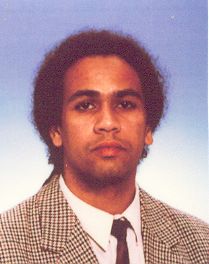
Osir Cirill Martin
Experience on the field of project management
Recent roles:
07/2016- in progress, Project Manager, Self-employed sole trader
- Preparation and implementation of European Union, Hungarian and UK applications.
- Complete project management of Hungarian, UK and international development tenders. Project accounting planning and execution.
- Preparation of project plans, budgets and financial analyses. Furthermore, constantly monitoring the progress, quality and costs of projects.
- Using specialised software and spreadsheets for planning, costing and analysing risks
Past roles:
01/2008-12/2015, Project Coordination Manager, Pro Region Agency
- Project manager, project coordinator and professional advisor of EU nature conservational, environmental protection and tourism projects in the Central Hungarian Region.
- Classify and evaluate the project plans and proposals of Central Hungarian Region
- Distribute the financial support which comes from EU developmental funds
- Negotiating with project owners, suppliers and other participants
- Supervision of projects, constantly monitoring progress, quality and costs
- Financial and professional help for the successful project fulfilment
- Using specialised software and spreadsheets for planning, costing and analysing risks
Education:
- 2003-2005 Sorbonne University Institute of Urban and Regional Development
- MSc Post Graduate Regional Planning and Urbanisation Development
- 1997-2001 University of Debrecen
- MSc Regional and settlement development geographer

Susanna Domosi
Founder & CEO of Furever Love Club, a USA based dog food manufacturer & seller.
Past roles:
- Director of Growth & Fintech Operations at METL (METL is a fiat on ramp to web3 wallets)
- Structured Credit Derivative Operations at Goldman Sachs
- Business Strategy Analyst at Taveras Private Holdings (Venture Capital & Private Equity Firm)
- Residential Real Estate Salesperson in New York City
Bachelors of Business Administration degree with a major in Finance and double minor in Advanced Business Analytics and Communications from the City University of New York (Zicklin School of Business). Graduated Magna Cum Laude.

Marie Horvath
Founder & CEO of The Leadership Institute based in California, US. (https://theleadershipinstitute.co/).
She graduated in Europe and holds a Master in Psychology and an MBA in Finance and Management.
She has been working and living in 5 countries and brings in a global experience.
She works with leaders in the tech industry across the US like Google, Meta, Salesforce and alike.
Credentials





Examinations and tests
- Timing Attack: attempts to influence the running time with pseudo-random numbers


Intelligens Technológiák Kft.
4028 Debrecen Táncsics Mihály street 3. 2/6. HUNGARY
intelligenstechnologiak@gmail.com

 DHCiphers